
Intro
Hello, I’m Sam. Since retiring, I’ve come to appreciate meals that feel comforting without being complicated. This recipe is one of my reliable go-to dishes, easy steps, warm flavors, and nothing fussy. If you enjoy simple, everyday cooking, this one will fit right into your routine. For a lemony twist that is just as simple, try Lemon Pepper Chicken.
Why This Recipe Works
- Minimal steps, so you can finish dinner without stress.
- Comforting flavor, but light and balanced.
- Pantry-friendly ingredients you likely already have.
- Great for beginners, because the method is forgiving.
- Easy cleanup, with one pan or sheet possible.
- Reliable every time, so it becomes a repeat meal.
Ingredient Breakdown
Boneless skinless chicken: Lean protein that cooks quickly, and stays tender when not overcooked. Swap in thighs for more richness.
Olive oil: Adds moisture and helps browning, and you can use avocado oil if you prefer a higher smoke point.
Garlic and onion: Base aromatics that give steady flavor. Use garlic powder and onion powder as a shortcut.
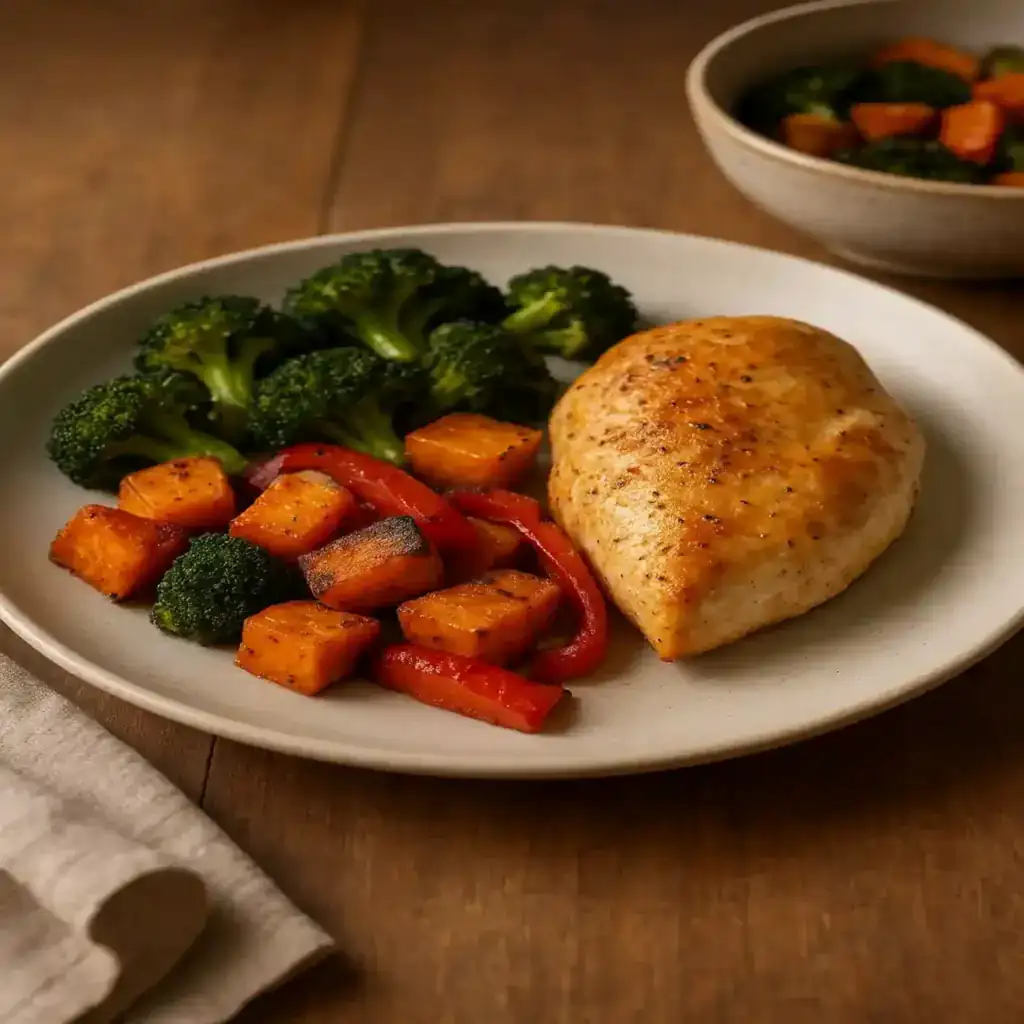
Vegetables: Bell peppers, zucchini, or broccoli work well. They roast alongside the chicken and soak up flavor.
Chicken broth or white wine: A splash keeps the pan sauce bright, and water works in a pinch.
Herbs and seasoning: Salt, pepper, and a mix of dried herbs like oregano and thyme are all you need. Fresh herbs finish the dish nicely.
Step-by-Step Cooking Guide
Start by warming your pan. Heat a tablespoon of oil over medium heat, so the pan is ready when the chicken goes in.
Season the chicken simply with salt, pepper, and a pinch of dried herbs. Next, sear the pieces for a few minutes per side until golden. This step gives texture and flavor.
Remove the chicken and set it aside briefly. Meanwhile, add a touch more oil and sauté the onion and garlic until soft, stirring so nothing burns.
Add the vegetables, and sauté just until they begin to color. Then return the chicken to the pan, tuck it in among the vegetables, and add a splash of broth to keep everything moist.
Cover the pan or transfer to a preheated oven for a short finish. Cook until the internal temperature reaches 165 F and the vegetables are tender, but still bright. Timing depends on thickness, so check early rather than late.
Finally, remove from heat, let rest for a few minutes, and finish with a squeeze of lemon or a scattering of fresh herbs. Resting keeps the juices inside the chicken, so it stays tender.
Tips and Helpful Notes
- To prevent overcooking, use a meat thermometer and pull the chicken at 160 F, letting carryover heat finish it to 165 F.
- If you need more flavor, brown the pan bits before deglazing with broth or wine, scraping them up for an easy sauce.
- Adjust seasoning slowly, taste midway, and add salt at the end if needed.
- For a shortcut, use pre-cut vegetables or a bag of mixed frozen veggies, and then roast rather than sauté.
- Make-ahead: you can marinate the chicken overnight for more depth, and finish it quickly the next day.
Serving Suggestions and Internal Links
Serve this with a fresh green salad, or pair it with a simple grain like rice or quinoa for a balanced plate. For another weeknight chicken option, try Chicken Cutlets, which cook fast and pair well with a crisp salad.
If you like air-fryer methods, these techniques translate well. See Air Fryer Boneless Skinless Chicken Thighs for an easy hands-off finish, or pick up a playful twist with Chicken Drumsticks in Air Fryer.
Storage and Reheating
Store leftovers in an airtight container in the fridge for up to 3 days. Separate sauce and grains if possible to keep textures fresh.
Reheat gently in a skillet with a splash of broth, or use the oven at 325 F until warmed through, which helps preserve juiciness. Microwaving works for quick meals, but use short bursts and stir in between.
FAQs
Can I use bone-in chicken? Yes, bone-in pieces add flavor, however they take longer to cook, so give them extra time and check temperature near the bone.
What sides go best with this dish? Simple roasted vegetables, a green salad, or a modest grain like barley or brown rice. These keep the meal balanced and easy.
Is this recipe suitable for meal prep? Absolutely. It reheats well, and you can portion it with grains and vegetables for ready lunches during the week.
How can I make it lower in sodium? Use low-sodium broth, reduce added salt, and rely on fresh herbs and citrus for brightness instead.
Conclusion
This set of Healthy Chicken Dinner Recipes is built around steady technique and sensible ingredients. It is straightforward, forgiving, and kind to busy evenings, and it rewards small adjustments with good results.
Make it your own by swapping vegetables or herbs, and keep the method simple. You will find a few small steps lead to a meal that is nourishing, tasty, and easy to return to week after week.